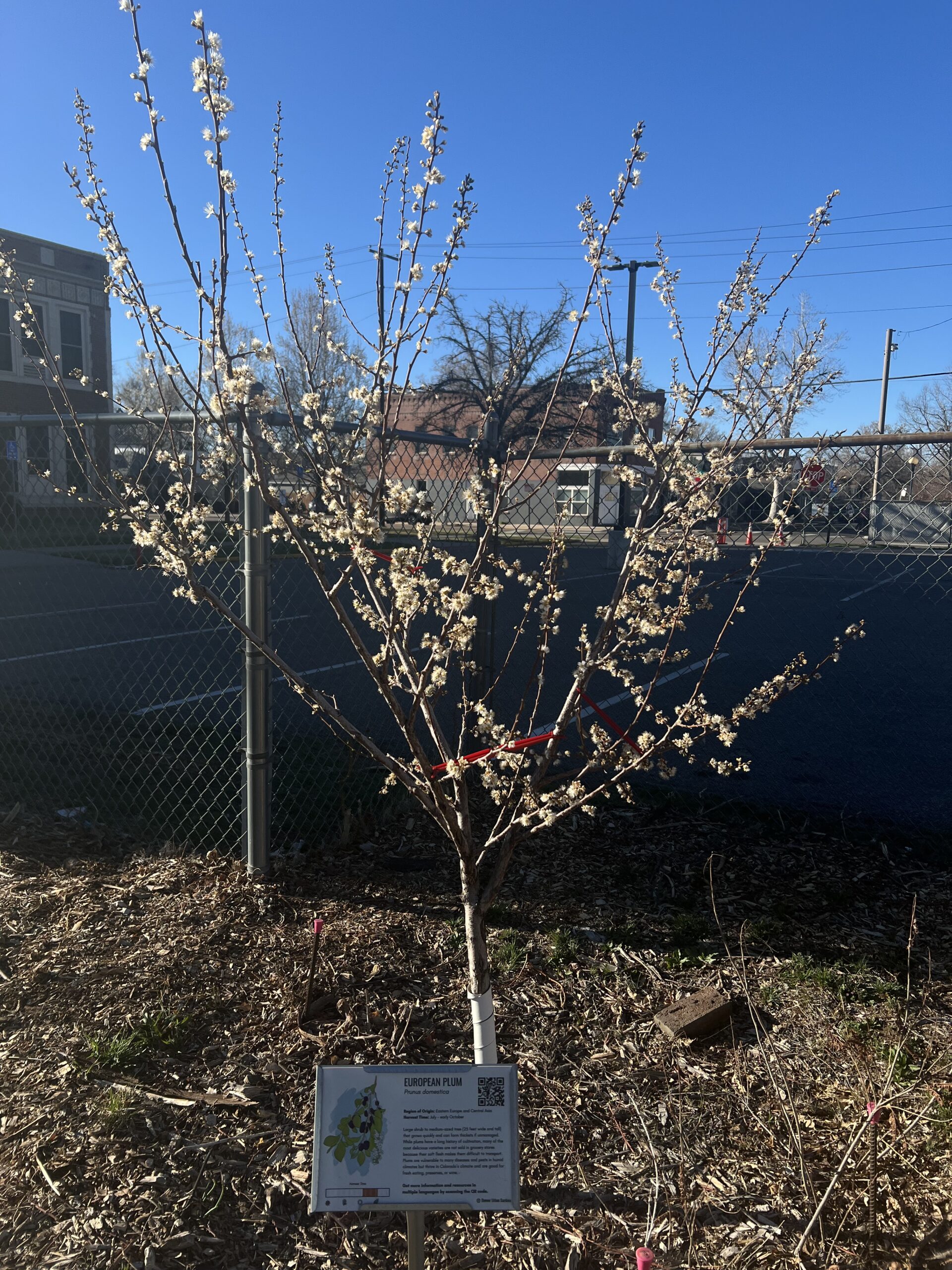
I started the 2026 season with uncertainty. I knew we were having a dry winter, but I was unsure how much the other Treekeeper and I should water. So we mostly didn’t water, and it turns out that was a huge mistake, which I have only partly corrected since the spring.
And there were other crimes against food forests. Take this lovely plum, the second of the three to bloom (photo from March). In early April Denver Urban Gardens was doing a workday in the food forest, and I and a staff member were discussing the probability of survival for the tiny plums covering this tree. A late freeze was forecast in a few days. And it did indeed freeze all the plums on trees throughout the metro area, including this one.
Okay, no plums this year. Last year we had four whole plums, this year none.
But there are cherries! Nobody but me seemed to want them, perhaps because DUG only planted sour cherries.
And peaches! And apples!
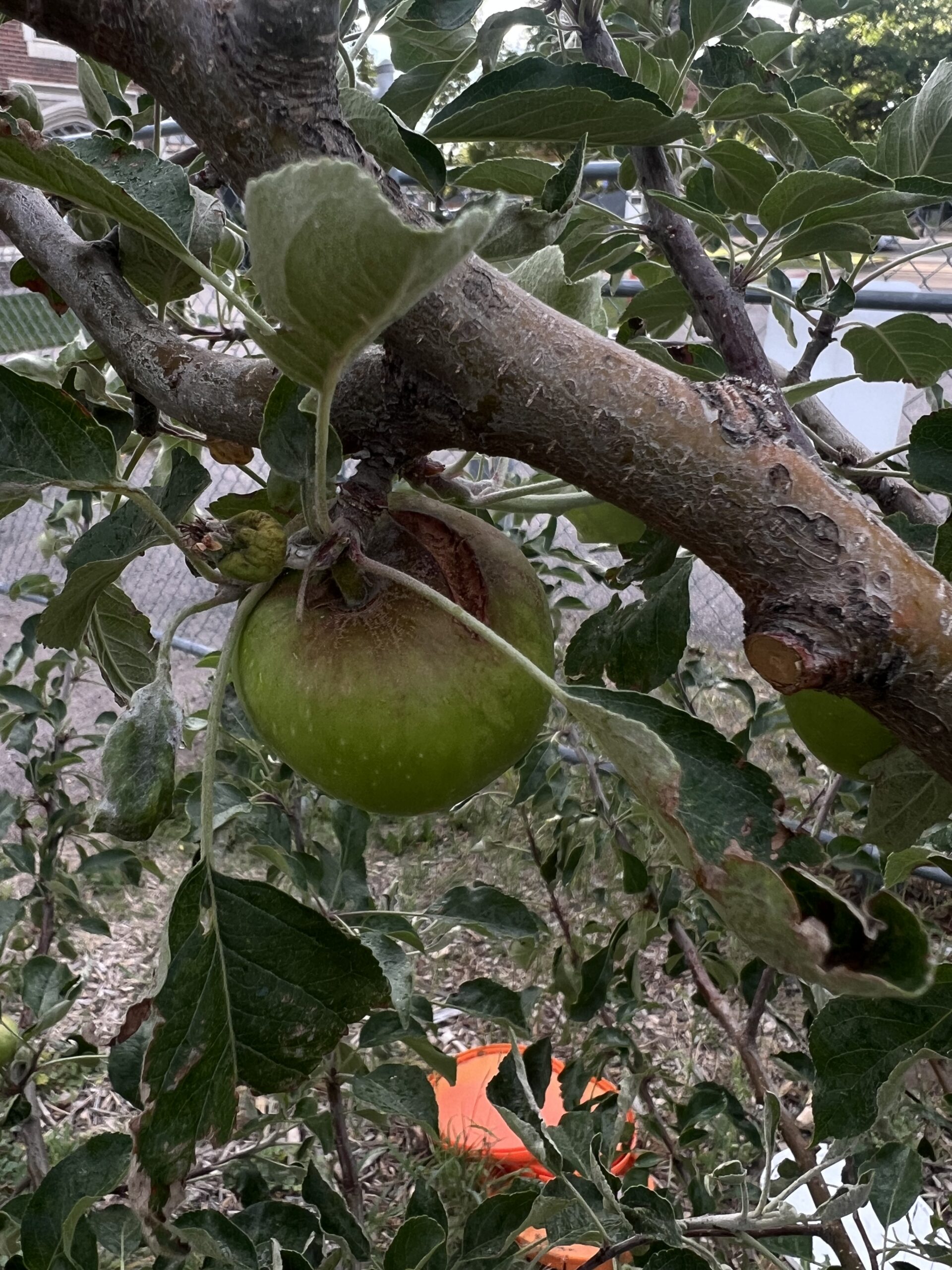
Here’s one of the Haralson apple trees in late spring. Several apples on those trees had lesions.
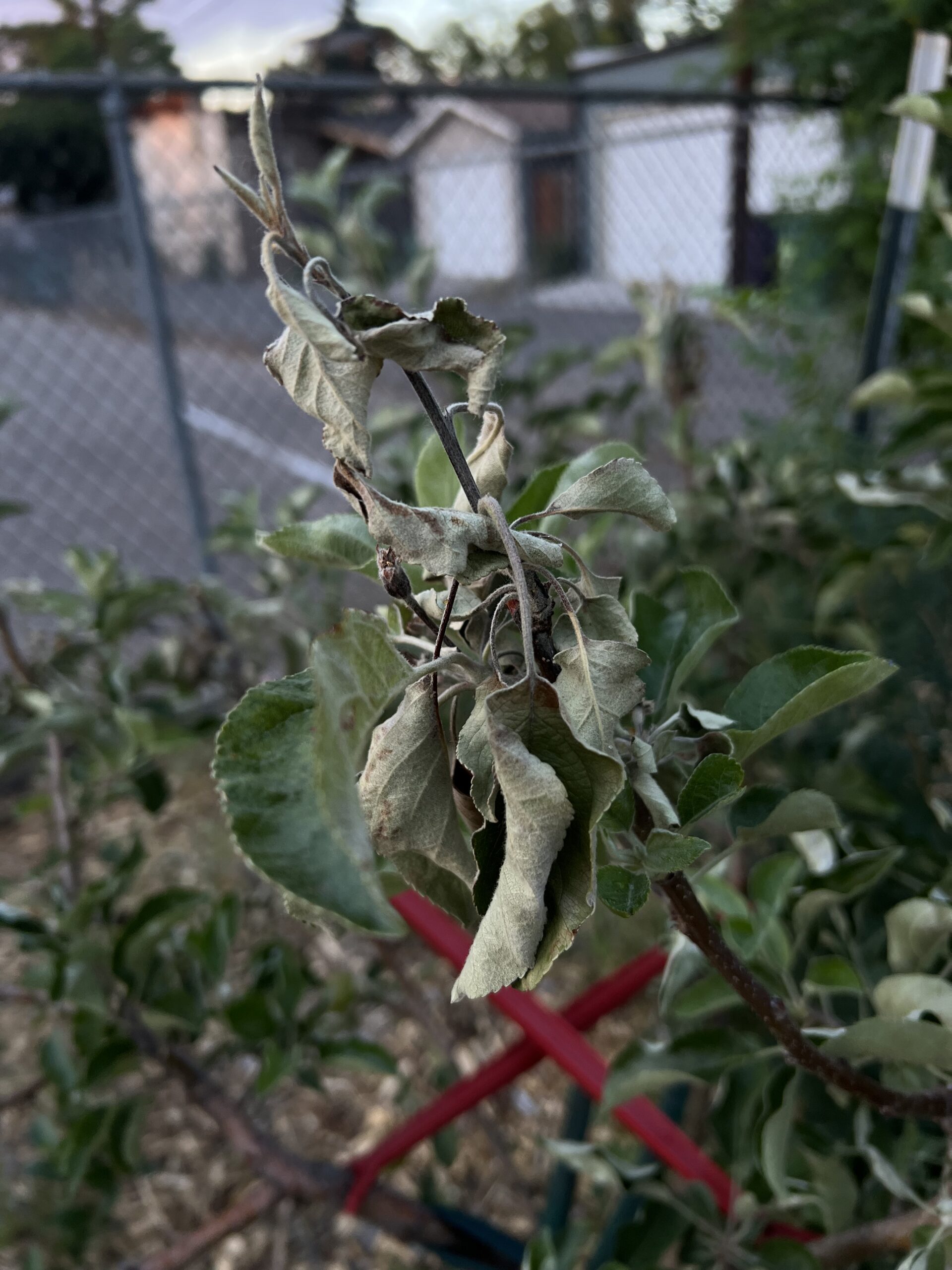
The Pristine apples in the back looked pretty terminal. The branch below suggests fire blight. But other leaves had spots that suggested cedar apple rust. In the end, when I pruned all the branches with dried-up leaves, none of the stems had the central black spot that can occur with fire blight.
One thing that startled everyone who saw it: these two sway-backed apple trees bloomed several times, once before fruiting and once or twice after. I think THEY thought they were terminal and did all they could to produce seeds. May they come back strong next year: they have such an unusual but graceful shape. I want to see them mature.
Disease, if there is one, undetermined, but I was still looking forward to the two dozen apples in the forest. Then they all disappeared. As did all the peaches. It seemed to happen all at once. For a few weeks, I was keeping track of the dwindling tree fruit, and then it was all gone. There weren’t any half-eaten peaches or apples on the ground. Did rapacious children at a school summer camp pick them all? Probably not; I suspect hungry people living on the street.
For crying out loud, they weren’t even ripe!
We had more white currants this year, but the red and black currants dried up quickly in this heat. In 2025, I was picking black currants until almost September, but this year they lasted until July. A dried black currant is not a pleasant thing to eat—it tastes like anise-flavored crunchy paper.
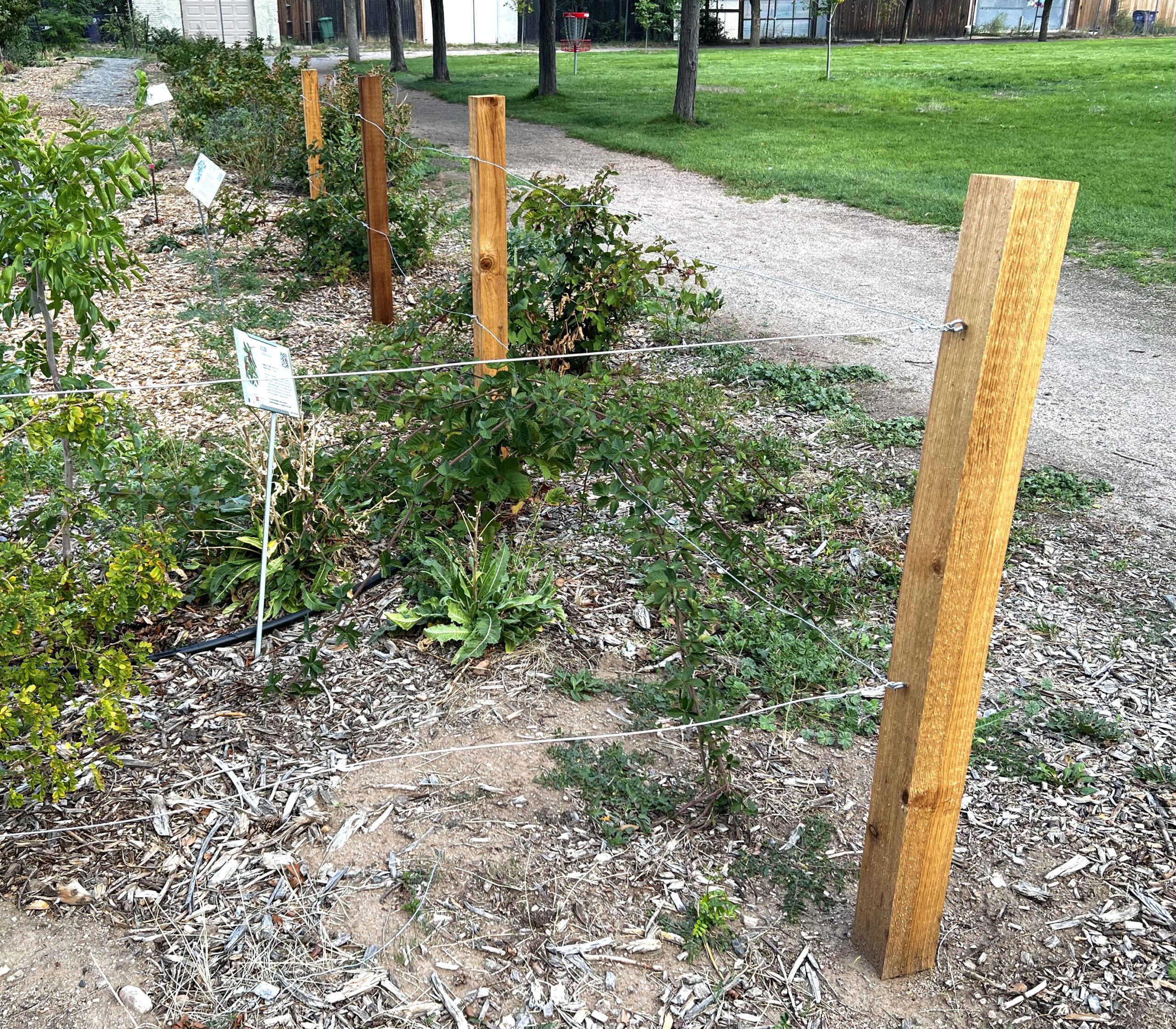
As long as I gave them extra water, the blackberries enjoyed the heat and produced a lot. And thanks to DUG, we now have a trellis for them! (Just one of their generous gifts to the food forest this year.)
In June, the other Treekeeper broke her toe, so for several months I did almost everything: watering, weeding, pruning, digging up the stupid honeylocust suckers … but now a new Treekeeper has started, and she has great ideas. Thank goodness.
Major lesson for the year: water every month (at least) during the winter. Don’t wait for rain or snow. As for the weather, we will just do our best to protect the trees and bushes from heat and drought. As they grow larger, they will protect each other, but for now the Treekeepers need to do it.